
Death Row on Shuffle: Nigeria's Top Court Keeps Skipping a Musician's Appeal
Yahaya Sharif-Aminu was sentenced to hang over a song he shared on WhatsApp. Six and a half years on, Nigeria's Supreme Court still has not managed to fit his appeal into its schedule.
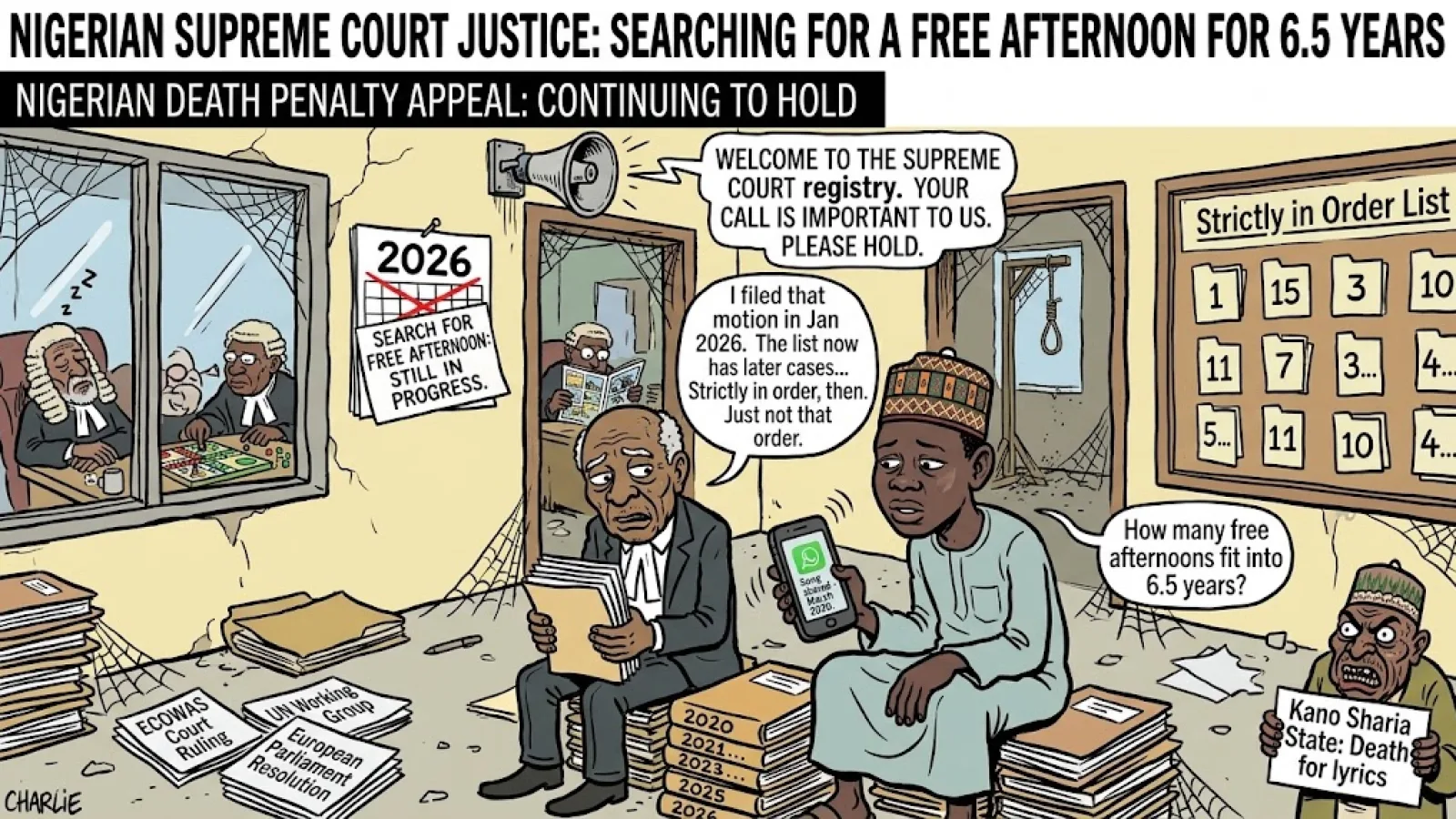
Forwarding a tune to your friends usually carries modest risks: a muted group chat, perhaps an eye-roll emoji. For Yahaya Sharif-Aminu, a young Sufi musician from Kano State in northern Nigeria, it meant arrest in March 2020. The authorities judged his lyrics blasphemous. A mob set fire to his family's house. Then, in August 2020, an Upper Sharia Court ordered that he be hanged, at the end of a trial where, according to his lawyers, nobody was there to defend him.
A legal remix nobody requested
The next act was pure repetition. The Kano State High Court threw out the conviction for procedural reasons, only to send him back for a fresh trial on the very same charges. In August 2022, the Court of Appeal blessed that retrial and declared Section 382(b) of Kano's Sharia Penal Code constitutional. The reward for enduring one flawed trial, in other words, was an invitation to a second. He remains in custody, bail refused, with the noose still somewhere down the line.
Now serving: someone else
His case landed at the Supreme Court in November 2022. The justices first heard it in September 2025, after a brisk 34-month warm-up. By November 2025, every brief had been lodged and the file was ready to go. In January 2026, the defence requested an expedited hearing. File a motion, said the registry. The defence filed a motion. A hearing on that motion was fixed for June 25, and then quietly struck from the list. The registry's explanation: appeals are heard strictly according to when they were filed. The cause list for September to December 2026 promptly included several appeals lodged after his. Strict order, apparently, is a matter of interpretation.
On September 14, the legal team, headed by Kola Alapinni, tried once more, this time writing directly to Chief Justice Kudirat Kekere-Ekun to request that the appeal be relisted with an early date. One sentence in their letter deserves to be framed and hung in every court registry in the land:
“delay is not a neutral listing inconvenience.”— Yahaya Sharif-Aminu's lawyers, on waiting in a death penalty case
Bigger than one playlist
The stakes extend well beyond a single prisoner. The appeal pits Kano's blasphemy clause against the constitutional guarantees of dignity, freedom of religion and freedom of expression, as well as against the treaties Nigeria has ratified. Victory could create a precedent against blasphemy laws throughout the north, laws that his supporters say put religious minorities at risk, including Muslims such as Yahaya himself. ADF International, which backs his defence, reports that Kano State officials have stated they plan to execute him in public should he lose. It is reassuring to know that at least one party to this case keeps a well-organised diary.
A greatest-hits album, minus one track
In the meantime, the list of voices speaking up for Yahaya keeps lengthening:
- two European Parliament resolutions calling for him to be freed;
- an opinion from a UN Working Group urging his release and reparations;
- an April 2025 judgment from the ECOWAS Court of West Africa holding the Kano provision incompatible with the African Charter and the UN covenant on civil and political rights, and ordering Nigeria to repeal or amend it;
- a UN special rapporteur raising concerns about the law following a visit in June 2026.
An impressive back catalogue, to be sure. The one release fans are still waiting for is his own.
His lawyers courteously acknowledge that none of these rulings or resolutions binds the Supreme Court. The calendar, it would seem, doesn't either. They caution, however, that the international community will interpret any further stalling as Nigeria sidestepping the conflict between state Sharia codes and its national Constitution. So far, adjournment is the only outcome this case can count on.
The Nigerian Constitution guarantees a fair hearing within a reasonable time. Sharing the song took a few seconds. Six and a half years later, the man who shared it is still waiting to be given a date.
Your call remains in the queue.
Countries
Read also
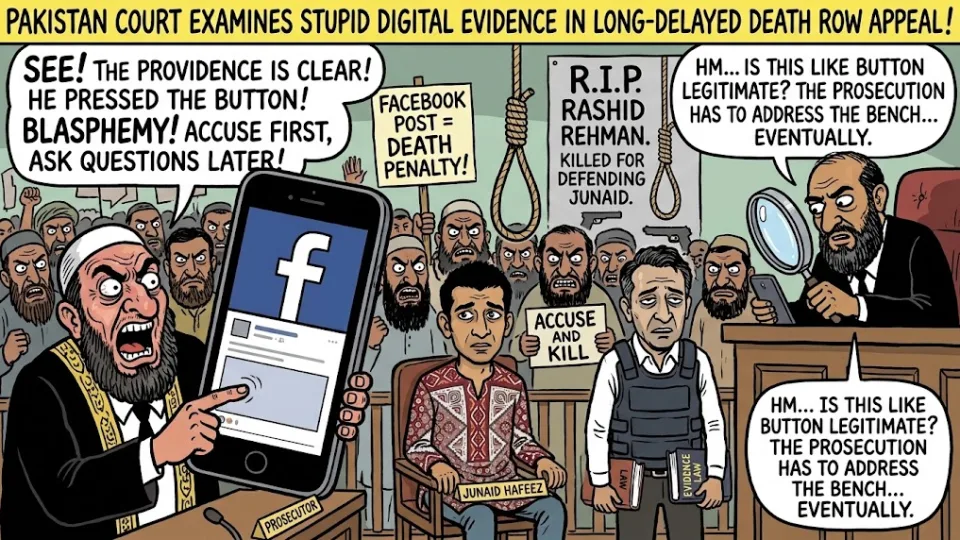
Death row first, evidence check later: Lahore judges query Facebook proof against Junaid Hafeez
Prosecutors in Pakistan have been told to show that the digital evidence used to convict Junaid Hafeez is both admissible and authentic. The former lecturer has been on death row for blasphemy since 2019, and his appeal has been waiting since 2020.
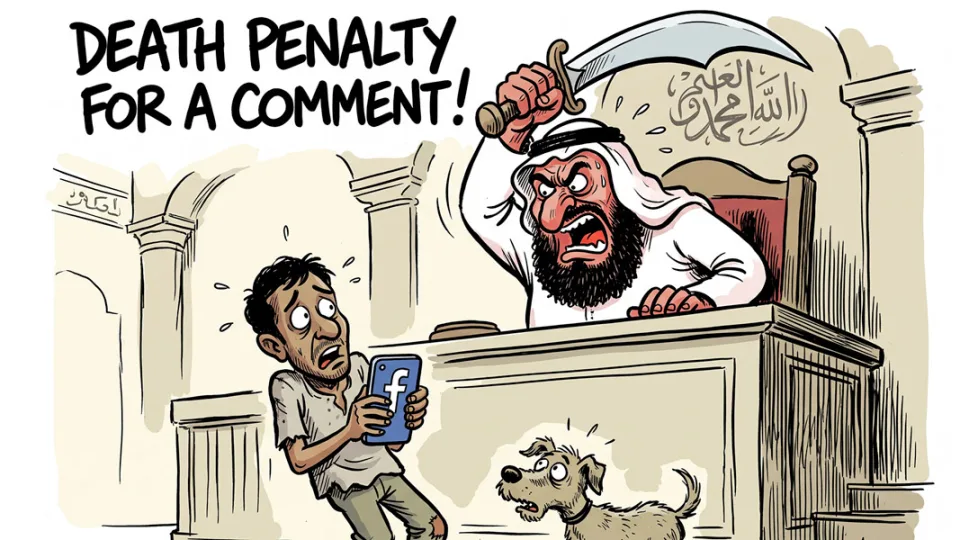
Saudi appeals court sentences Sri Lankan Tamil worker to death over Facebook comment
Sivarasa Anojan, a Tamil migrant worker from Sri Lanka, now faces the death penalty after a Saudi appeals court replaced his five-year prison term for blasphemy tied to a Facebook comment. A Sri Lankan MP is challenging the government's handling of the appeal.
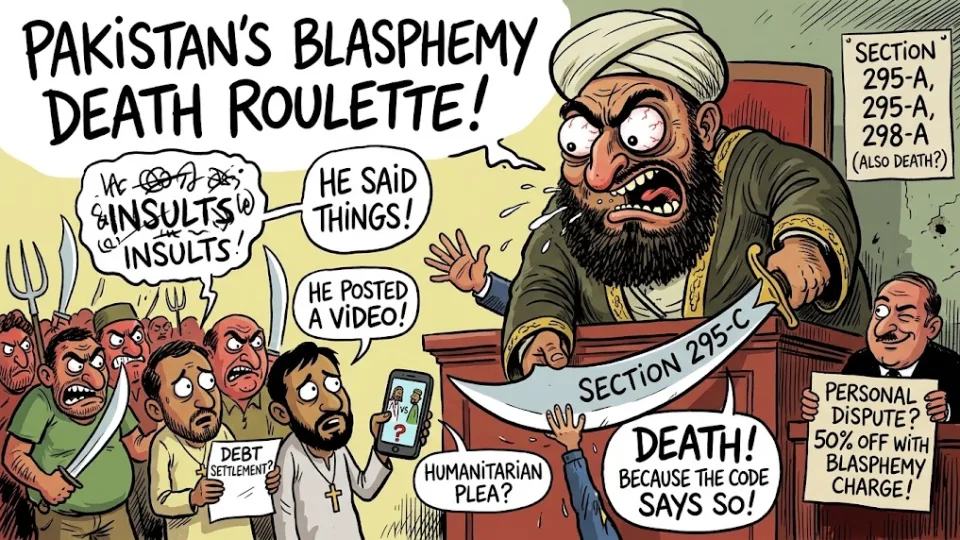
Pakistan's blasphemy machine claims two more Christians, with execution a possible outcome
Two Christians in Pakistan now face charges under the country's blasphemy laws, among them Section 295-C, which is punishable by death. One man is accused of insulting Muhammad in speech, the other of sharing a video online.