
In Egypt, Belief Is Free. Changing It Is Terrorism.
Egypt’s constitution says freedom of belief is absolute. Said Abdelrazek, a convert from Islam to Christianity, has been detained since July 2025 and is on trial before a terrorism court. The country’s highest Islamic authority explained the nuance years ago, on television.

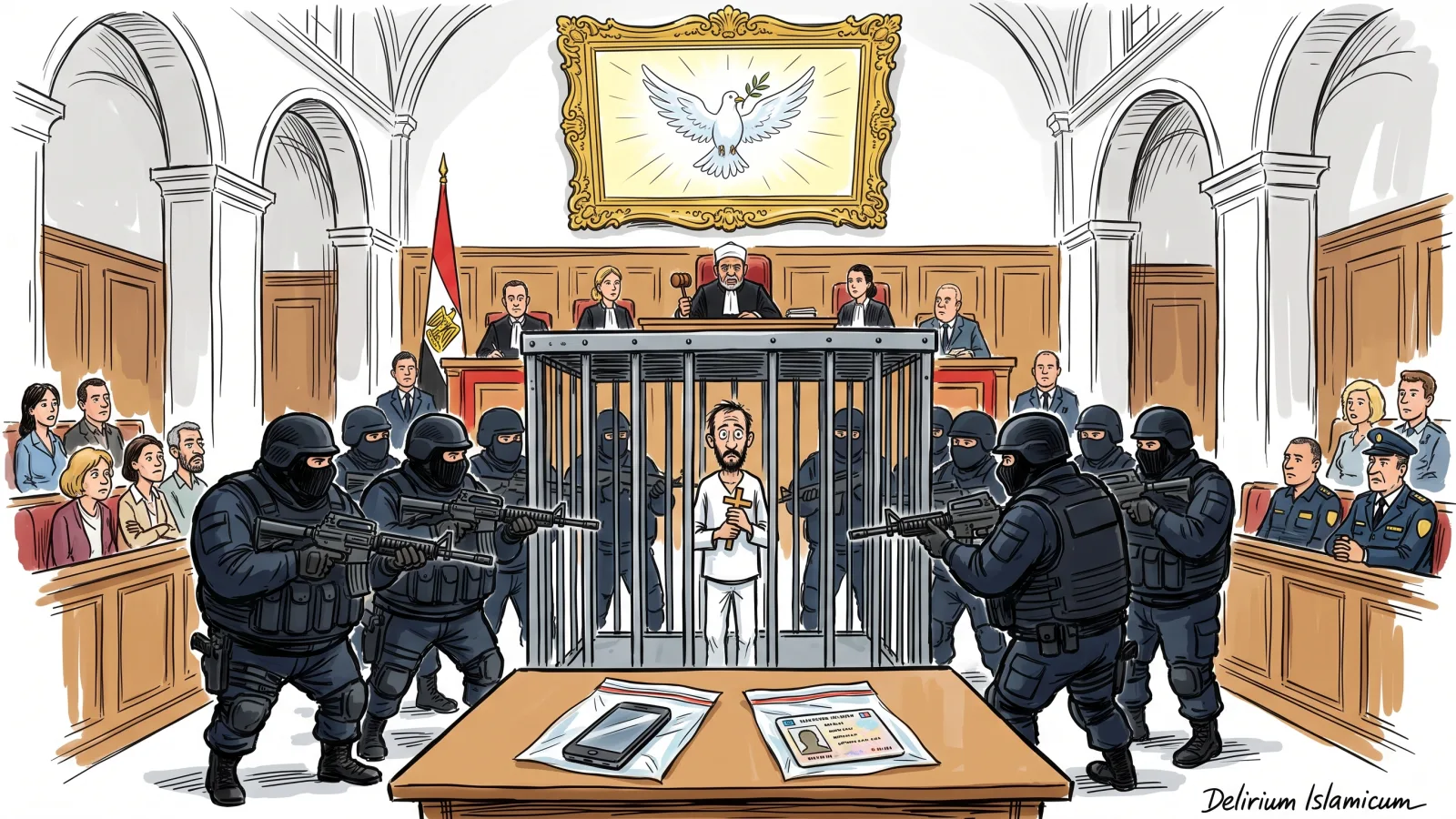
Absolute, says the constitution
"Freedom of belief is absolute," declares Article 64 of the Egyptian constitution. Said Abdelrazek, 30, took it at its word. Born a Muslim, he converted to Christianity in 2018 and left for Russia the following year to seek asylum. Russian authorities arrested him in 2023 over a privately filmed video said to be offensive to Islam, then sent him home in 2024. On arrival, according to the US Commission on International Religious Freedom (USCIRF), Egyptian security held him incommunicado for about ten days, pressed him to reconsider his faith and to keep an eye on other converts, then released him with orders not to speak publicly or proselytise.
A terrorism court for a change of faith
On July 15, 2025, he was arrested again at his home in Cairo, without a warrant. He had resumed posting about his faith online and, according to Amnesty International, had tried to have his identity card show his new religion. After nine months of pretrial detention, he now stands before the Terrorism Circuit of the First Criminal Court in Badr, charged with founding, leading and financing an unlawful group, promoting ideas harmful to national unity, and showing contempt for Islam. He faces up to life in prison. Egypt has no law against leaving Islam. It has terrorism laws, which turn out to be accommodating.
Amnesty reports pressure to renounce his faith, attempts to erase his Christian tattoos and hours spent suspended in a "crucifixion" position. He suffers from severe pain, his requests for a medical examination have been dismissed, and his lawyer was allowed a single visit in January. USCIRF lists him among religious prisoners of conscience. On June 15, the prosecution's witnesses and its forensic expert failed to show up in court. The defendant did not have that option.
The Grand Imam's nuance
The country's highest Islamic authority once laid out the doctrine. During Ramadan 2016, on his daily television programme, Ahmed al-Tayeb, Grand Imam of Al-Azhar, explained that classical jurists considered apostasy a crime punishable by death unless the apostate repented, and that contemporary scholars still held it to be a crime, with a discretionary penalty that could go as far as death. Freedom of belief, he added, was one thing.
"Freedom to renounce a particular religious belief is something else."— Ahmed al-Tayeb, Grand Imam of Al-Azhar, on Egyptian television in 2016 (CIHRS translation)
The Cairo Institute for Human Rights Studies urged him to retract, warning that such words fuel violent extremism. Three years later, in Abu Dhabi, he signed with Pope Francis the Document on Human Fraternity, which states that every individual enjoys freedom of belief. Freedom of belief, it seems, is one thing in Abu Dhabi and something else in Badr.
Next hearing: October 21
The court heard several prosecution witnesses on September 6 and is due to hear the rest on October 21. Said Abdelrazek took the constitution at its word. The state took him to a terrorism court.
Sources
Countries
Keywords
Read also
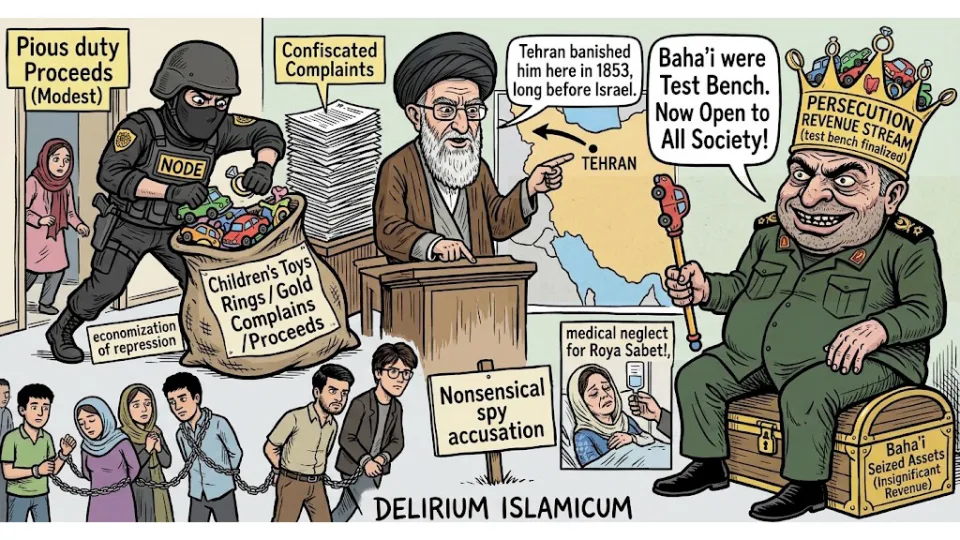
Iran Seizes the Rings, the Toys and the Complaints
Sixty-nine Baha'is behind bars, homes raided from Shiraz to Yazd, a woman sentenced to more than five years for offending Islam's sacred law, and security agents walking off with wedding rings and children's toys. In the Islamic Republic, persecuting a religious minority has become both a pious duty and a revenue stream. A modest one, economists say. It's the principle that counts.
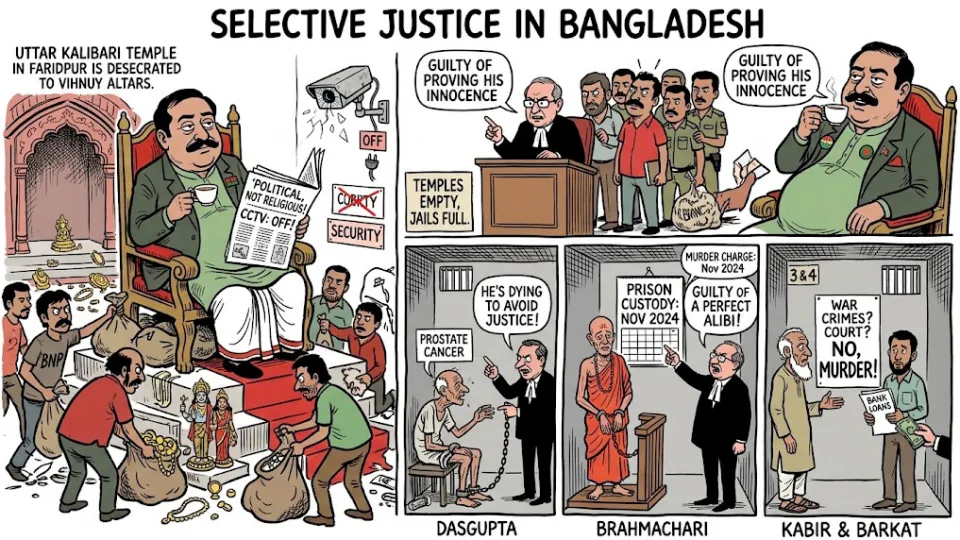
Idols Stolen, Advocates Jailed, Cameras Off
In Faridpur, thieves made off with a Kali idol and its gold while the temple's cameras were out of order. In Kolkata, Indian rights groups counted more than a hundred minority members killed in Bangladesh since early 2025 and four of their defenders jailed or hounded. Dhaka has changed governments. Its Hindus are still waiting for the change.
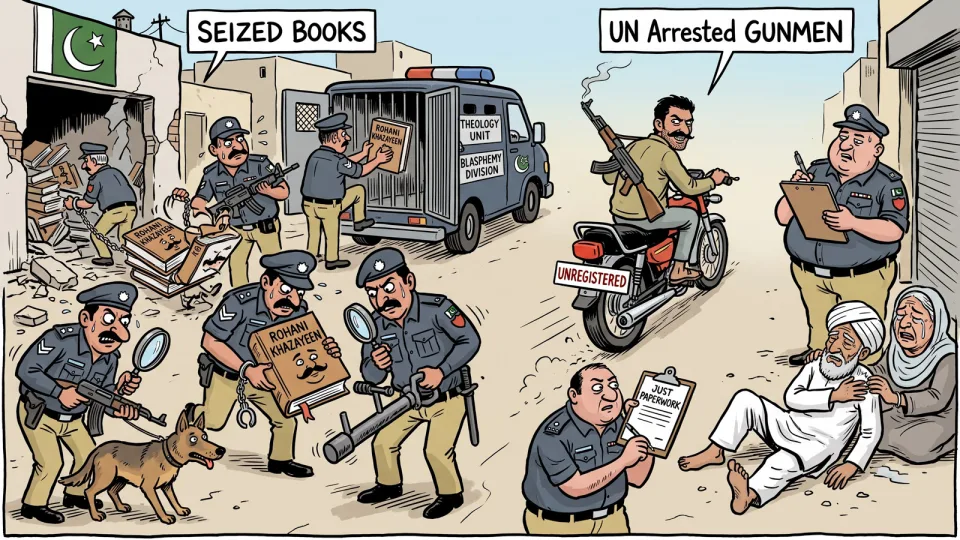
Pakistan Seizes the Books, Not the Gunmen
In September alone, one Ahmadi was shot dead and two others were wounded in Pakistan's Punjab province, with no arrests reported. Meanwhile, the country's Federal Constitutional Court found the time to uphold a ban on the community's sacred texts. Priorities.