
Senegal Finds Unanimity: Against Its Gay Citizens
Since March, Senegal has doubled prison terms for gay sex, made defending gay people a crime and written heterosexual marriage into its constitution, each time without a single vote against. More than 100 people have since been charged. One lawmaker summed up the program: gay people will no longer breathe in this country.

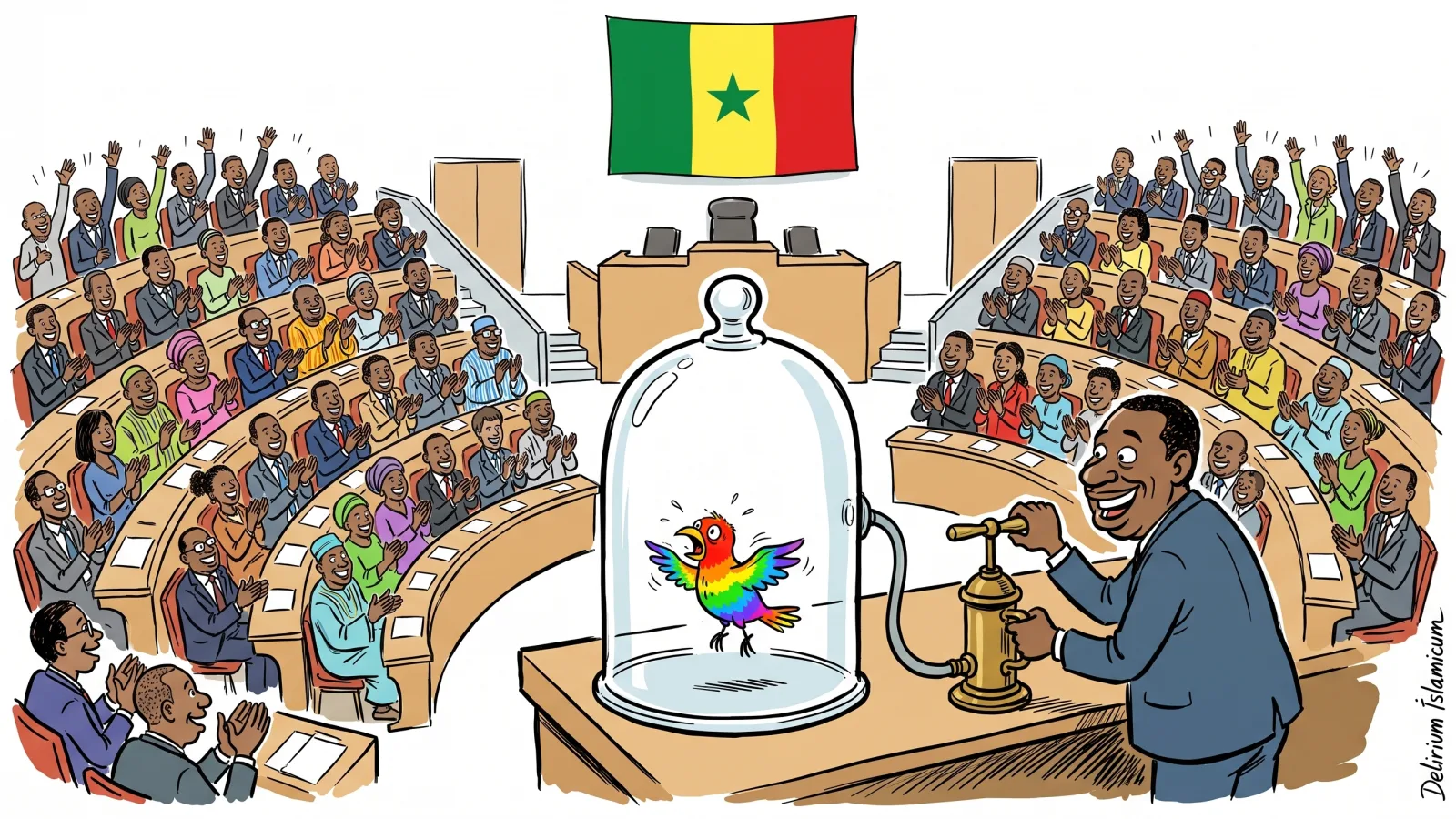
Unanimity, at last
Senegal's lawmakers rarely agree on anything. On this, they have now agreed twice, without a single vote against. On March 11, the National Assembly voted 135 to zero, with three abstentions, to double the maximum sentence for same-sex relations to ten years in prison, with fines of up to 10 million CFA francs (about $17,600). The "promotion" or "financing" of homosexuality now carries three to seven years. Defending gay people, in other words, now costs more than gay sex used to: the old maximum was five years. President Bassirou Diomaye Faye signed the law. On June 29, the Assembly added, by 129 votes to zero, that marriage is the union of a man and a woman, outlawing in the constitution a marriage that was never legal anyway. Activists quoted by Africanews say politicians are falling back on a subject that "draws unanimity".
"Homosexuals will no longer breathe in this country."— Diaraye Ba, member of Senegal's National Assembly, during the March debate
The law does contain one safeguard: it punishes anyone who accuses someone of same-sex acts without evidence. The falsely accused heterosexual can sleep soundly.
Now serving: the crackdown
The arrests started before the vote. On February 9, gendarmes in Dakar arrested 12 men for "acts against nature" and alleged intentional transmission of HIV. On April 10, a court in Pikine-Guédiawaye, a Dakar suburb, handed down the first conviction under the new law: six years in prison and a $3,300 fine for a 24-year-old man. On August 7, the prosecutor announced that 71 men had been charged with "unnatural acts" and that charges against 28 others had been dropped. More than 100 people have been charged since the law passed, including local celebrities. The HIV charges, meanwhile, have evaporated. A conviction also strips people of the right to vote, hold public office or work for the state. Human Rights Watch researcher Larissa Kojoué describes a climate of "constant fear".
The mob did not wait for parliament. In October 2023, in Kaolack, a crowd dug up the body of a man believed to be gay, dragged it through the streets and burned it in the town square, while videos went viral.
Public health, Senegalese style
Human Rights Watch denounces the use of condoms, lubricant and HIV medication as evidence of same-sex conduct, and community health workers fear legal trouble if their numbers turn up in detainees' phones. Men who have sex with men are by far the group most affected by HIV in Senegal, and health workers warn that harsher penalties will push them away from testing. The country has found an original way to fight the epidemic: treating prevention as a confession.
Against Western values, with Massachusetts' help
Supporters present homosexuality as a Western import. The loudest campaigner is And Samm Jikko Yi, a network of Islamic and civil society organisations, whose leader urged the president to sign quickly.
"These people, whom I consider a public danger, will continue to escape."— Imam Babacar Sylla, leader of And Samm Jikko Yi
According to Reuters, the same network sought campaign advice from MassResistance, an American "pro-family" lobby. Nothing says resistance to Western influence like a strategy call with Massachusetts. As for the ban itself, it is no colonial leftover: France stopped punishing gay sex in 1791, while Senegal's article 319 dates from 1965, five years after independence. Senegal is not alone: at least 32 of Africa's 54 countries criminalise same-sex relations, from Muslim Mauritania and Somalia to Christian-majority Uganda, all three of which provide for the death penalty.
Senegal's gay men can still breathe. Just not freely.
Countries
Keywords
Read also
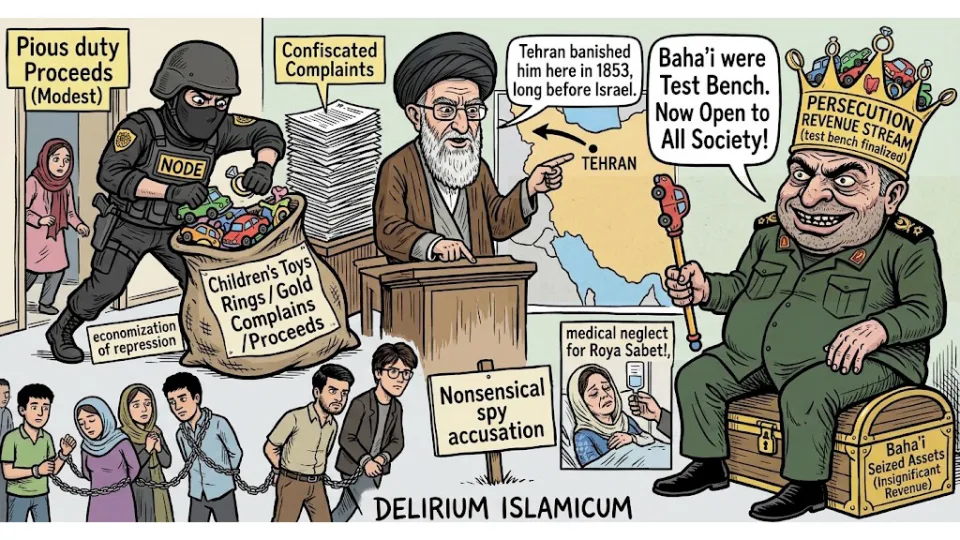
Iran Seizes the Rings, the Toys and the Complaints
Sixty-nine Baha'is behind bars, homes raided from Shiraz to Yazd, a woman sentenced to more than five years for offending Islam's sacred law, and security agents walking off with wedding rings and children's toys. In the Islamic Republic, persecuting a religious minority has become both a pious duty and a revenue stream. A modest one, economists say. It's the principle that counts.
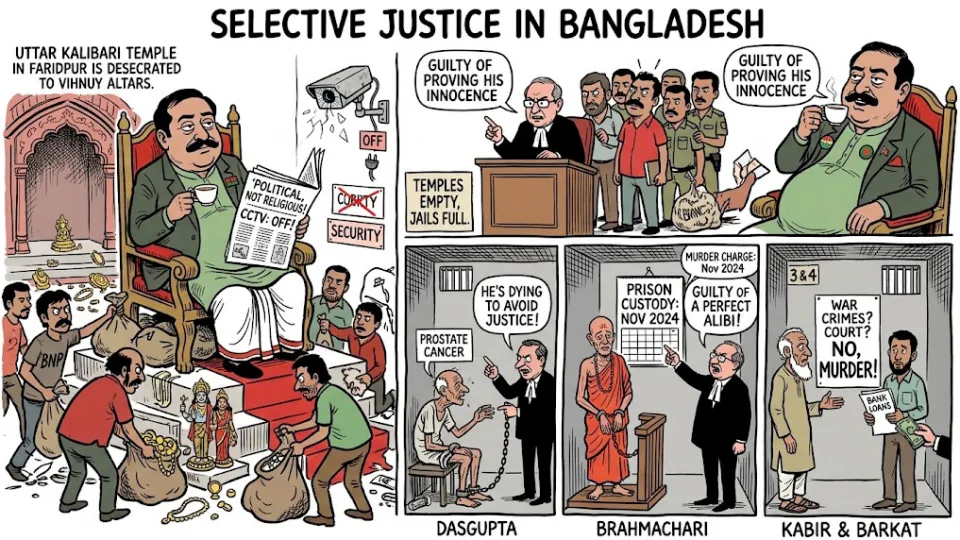
Idols Stolen, Advocates Jailed, Cameras Off
In Faridpur, thieves made off with a Kali idol and its gold while the temple's cameras were out of order. In Kolkata, Indian rights groups counted more than a hundred minority members killed in Bangladesh since early 2025 and four of their defenders jailed or hounded. Dhaka has changed governments. Its Hindus are still waiting for the change.
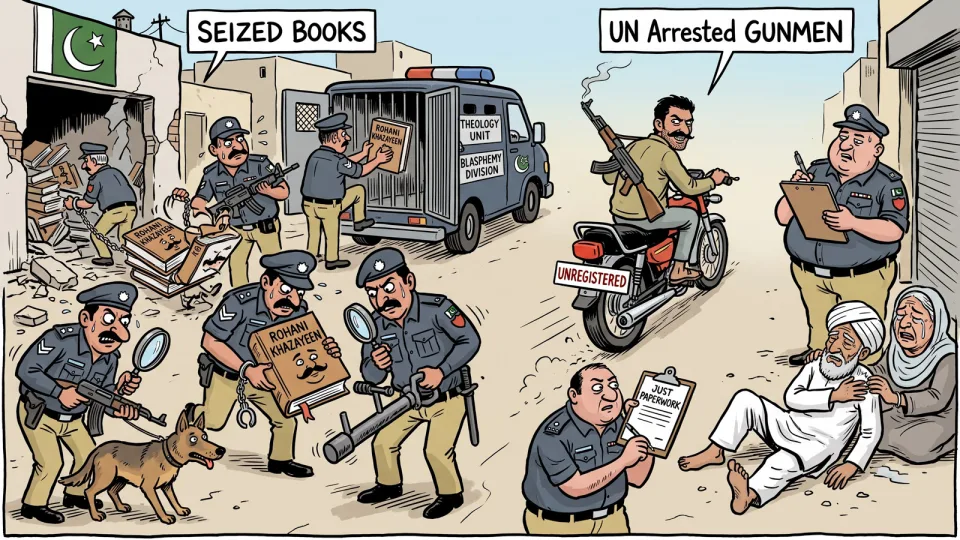
Pakistan Seizes the Books, Not the Gunmen
In September alone, one Ahmadi was shot dead and two others were wounded in Pakistan's Punjab province, with no arrests reported. Meanwhile, the country's Federal Constitutional Court found the time to uphold a ban on the community's sacred texts. Priorities.