
Ten Years: For the Lie, or for the Pig?
An Iraqi court has jailed a butcher for ten years for passing off wild boar as beef in Najaf, one of Shia Islam's holiest cities. That is more than some officials convicted of illicit enrichment recently got. Was he punished for cheating his customers, or for the animal itself? The court isn't saying.
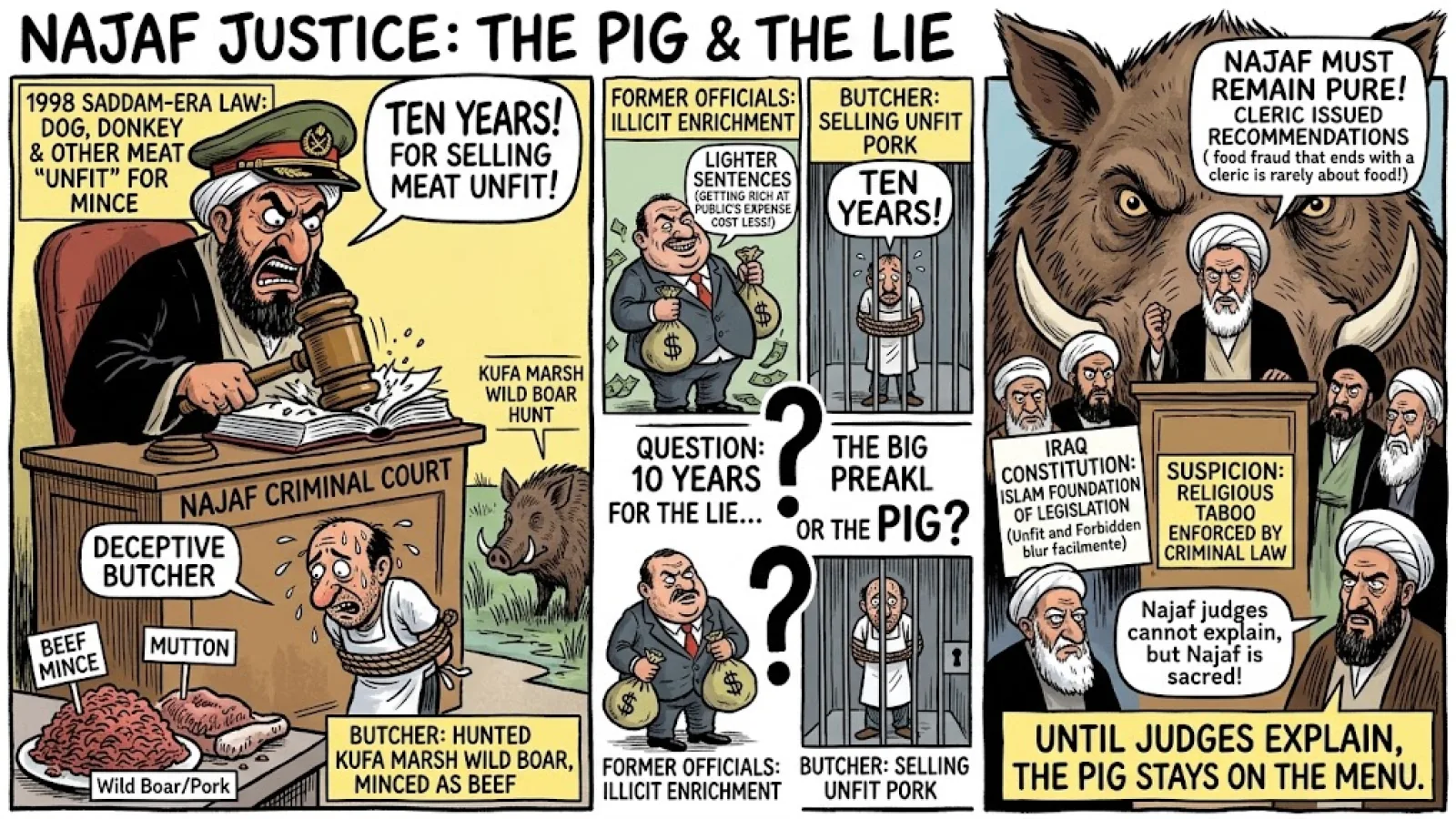
The recipe was simple. Hunt wild boar in a marsh near Kufa, skin it, mince it, and sell it to customers in Najaf as beef and mutton. That, according to Iraqi authorities quoted by local media, was the business model of a butcher arrested in early September with two slaughtered and skinned boars. Iraq's Supreme Judicial Council says 75 kilograms of pork were seized. On September 14, the Najaf Criminal Court sentenced him to ten years in prison.
Ten years. According to the Iraqi outlet +964, that is longer than the sentences handed down last month to former officials convicted of illicit enrichment. Judging by recent verdicts, getting rich at the public's expense costs less than selling the wrong animal.
So what exactly earned him a decade? The judiciary speaks only of meat unfit for human consumption, and AFP reports the ruling rests on a 1998 law, a Saddam-era relic covering dog, donkey and other unfit meat. Yet the only customer quoted by AFP found it excellent and cheaper than the market, and kept coming back for more. A palate is not a lab test, admittedly. But between "unfit" and "excellent", there is room for a whole pig. No law explicitly bans selling pork in Iraq, a Muslim-majority country with a Christian minority. Nobody has explained how the court got to ten years. Three suspects remain: the lie told to customers, the state of the meat, or the animal itself.
If it was the lie, ten years is steep. If it was the pig, it is something else: a religious taboo enforced through criminal law and dressed up as food safety. The suspicion is hardly far-fetched. Iraq's constitution names Islam the state religion and a foundation source of legislation, a setup in which the unfit and the forbidden blur all too easily. Days after the verdict, the powerful Shia cleric and politician Muqtada al-Sadr even issued recommendations for Najaf. A food fraud that ends with a cleric weighing in is rarely just about food.
None of this makes the butcher a hero. He deceived customers who, without knowing it, broke a rule they hold sacred. One of them told AFP he kept coming back because the meat was excellent and cheap. That deserves a trial and a sentence. Ideally, one that can be explained.
Ten years for the lie, or for the pig? Until Najaf's judges explain themselves, one suspicion stays on the menu: that the lie was the side dish, and the pig the main course.
Sources: AFP (via Malay Mail and The Straits Times, September 14, 2026), 964, Shafaq News.
Sources
Countries
Read also
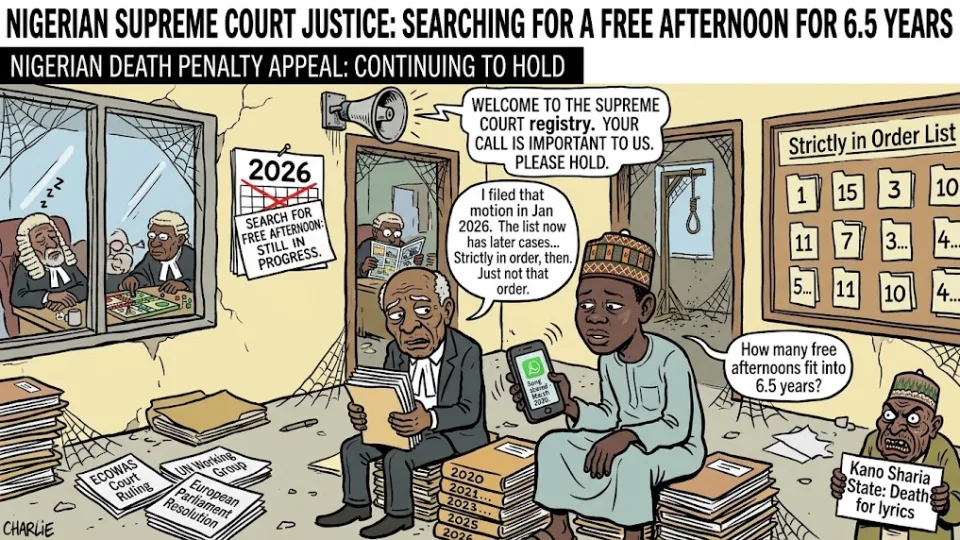
Death Row on Shuffle: Nigeria's Top Court Keeps Skipping a Musician's Appeal
Yahaya Sharif-Aminu was sentenced to hang over a song he shared on WhatsApp. Six and a half years on, Nigeria's Supreme Court still has not managed to fit his appeal into its schedule.
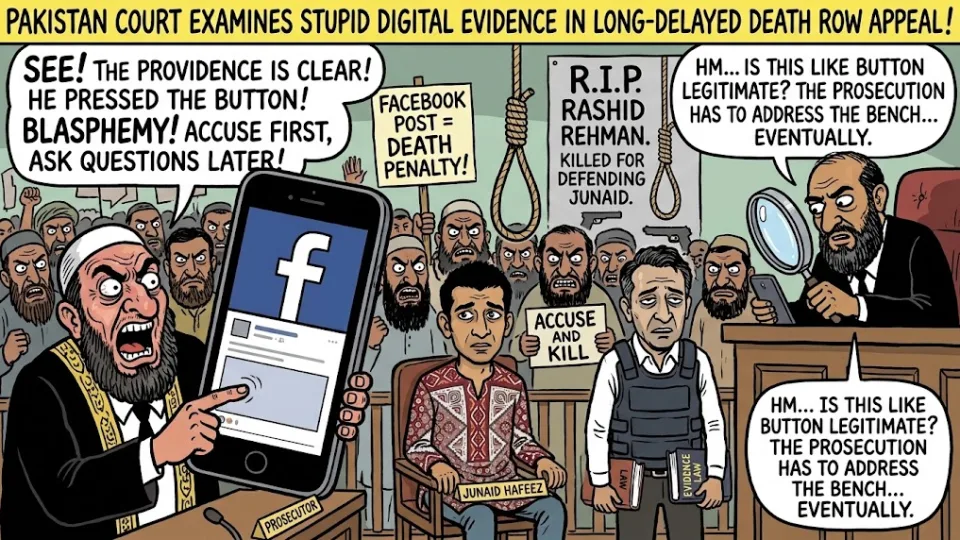
Death row first, evidence check later: Lahore judges query Facebook proof against Junaid Hafeez
Prosecutors in Pakistan have been told to show that the digital evidence used to convict Junaid Hafeez is both admissible and authentic. The former lecturer has been on death row for blasphemy since 2019, and his appeal has been waiting since 2020.
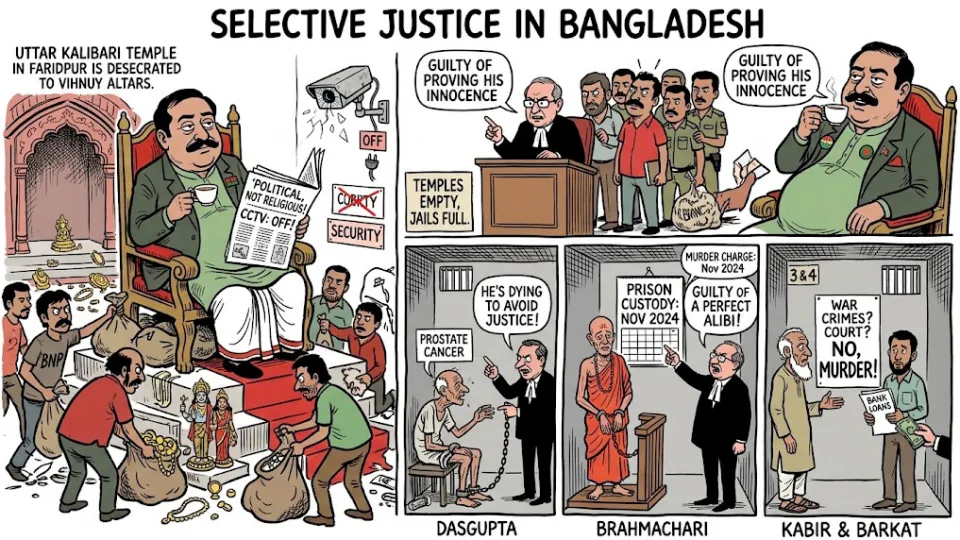
Idols Stolen, Advocates Jailed, Cameras Off
In Faridpur, thieves made off with a Kali idol and its gold while the temple's cameras were out of order. In Kolkata, Indian rights groups counted more than a hundred minority members killed in Bangladesh since early 2025 and four of their defenders jailed or hounded. Dhaka has changed governments. Its Hindus are still waiting for the change.