
Promise kept: the Taliban deliver on their vow to flog women in public
In March 2024, supreme leader Hibatullah Akhundzada pledged to flog and stone women in public. Rights groups now count 2,745 people subjected to corporal punishment between February 2022 and April 2026, and the U.N. says 2025 broke every previous record.
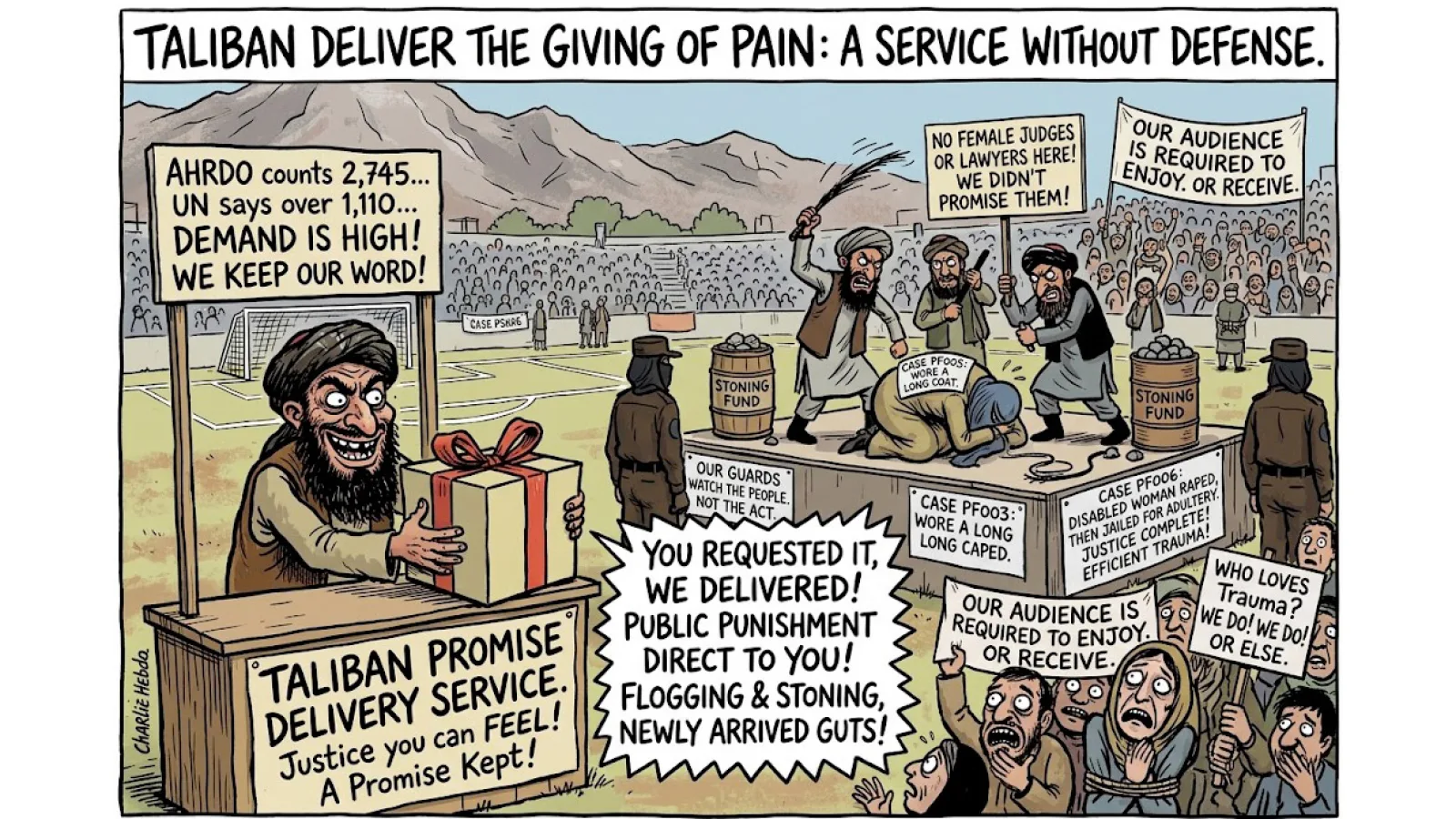
Leaders are often accused of breaking their promises. Not Hibatullah Akhundzada. In March 2024, the Taliban's rarely seen supreme leader announced in an audio message, reported by NPR, the comeback of an old favorite of his justice system: “We will flog the women ... we will stone them to death in public [for crimes].”
The movement already considered flogging and stoning fitting for offenses such as educating girls despite the ban on secondary schooling for females, or adultery. Since then, it has shown admirable follow-through.
The figures, courtesy of the Taliban
The Afghanistan Human Rights and Democracy Organization (AHRDO), an NGO investigating rights abuses, counts 2,745 people subjected to corporal punishment between February 2022 and April 2026, using the Taliban's own public records. A U.N. report from March 2026 cites at least 1,110 floggings last year: “in 2025 alone, more men and women were subjected to public flogging than in all previous years combined.”
These tallies come from cases the Taliban's Supreme Court posts online and in more than 500 press releases. Advocates suspect more: on-the-spot floggings, for instance of women breaching the dress code, rarely reach the court records.
Filming is banned, but opponents record discreetly and post the footage. MA, an Afghan activist who gave only her initials for fear of reprisals, shared with NPR a video reportedly showing a woman flogged in Kandahar province. NPR could not verify it independently; the Taliban did not answer a request for comment.
Justice, Taliban-style
“The floggings are an important aspect of administration of justice in the Taliban's eyes,” says Shaharzad Akbar, executive director of the rights group Rawadari, a way to “control and repress the population.” Amnesty International's Samira Hamidi calls them “a tool of intimidation and social control.”
Small detail: Afghanistan remains party to the Convention against Torture, among other treaties. “When something is called a punishment but itself constitutes a human rights violation, it cannot be considered a lawful punishment or justice,” says U.K.-based lawyer Haydee Dijkstal, who provided legal analysis for the AHRDO report. In the cases documented, no one got proper legal representation, a defense, or even a chance to speak in court.
Who ends up under the whip
Women and marginalized groups, including the LGBT community, bear the brunt, charged with “crimes” like appearing in public without a mahram (male guardian), same-sex or extramarital relations, or “running away” from home. Defense is hardly an option: since 2021, the Taliban have dismissed about 270 women judges and roughly 1,500 registered women lawyers. Afghanistan now has no women judges, prosecutors or officially registered female lawyers.
- Case PF003: a woman in a long coat rather than a burqa was arrested at a bazaar, beaten until her head bled, and sentenced to 15 lashes.
- Case PF006: a woman with an intellectual disability was detained in her garden and raped at a Taliban checkpoint, her family told AHRDO. When they complained, she was jailed for “having a relationship outside of marriage”: twenty lashes and two months in prison, where she suffered life-threatening injuries.
The show goes on
Survivors describe ostracism and difficulty finding medical care. Akbar also wonders about the audience: “what does it say about someone who would line up to see another human being beaten up?” Hamidi warns it “normalizes violence, fosters fear and self-censorship.”
The Taliban will not last forever, but what if we can't break out of this chain of trauma, anger and resentment they are inculcating within the communities.— Shaharzad Akbar
Sources
Countries
Read also
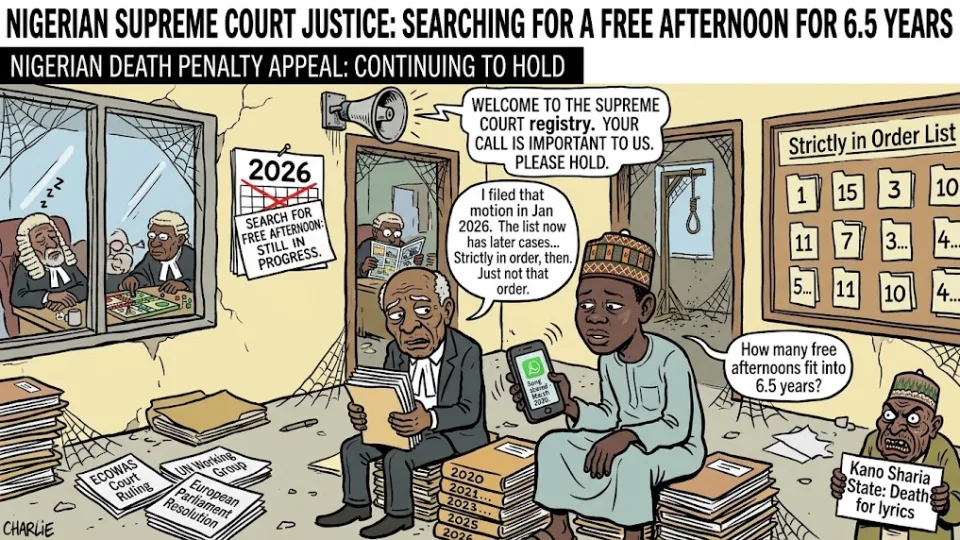
Death Row on Shuffle: Nigeria's Top Court Keeps Skipping a Musician's Appeal
Yahaya Sharif-Aminu was sentenced to hang over a song he shared on WhatsApp. Six and a half years on, Nigeria's Supreme Court still has not managed to fit his appeal into its schedule.
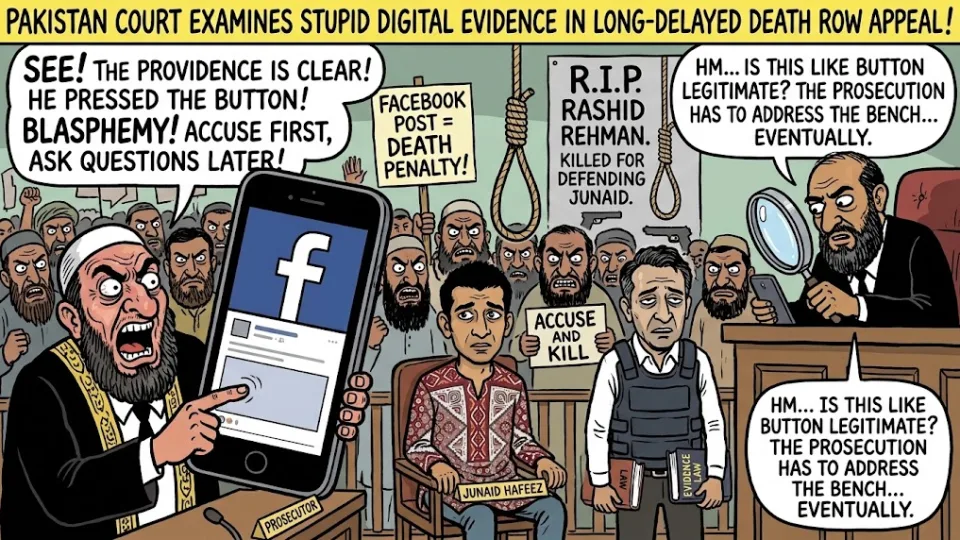
Death row first, evidence check later: Lahore judges query Facebook proof against Junaid Hafeez
Prosecutors in Pakistan have been told to show that the digital evidence used to convict Junaid Hafeez is both admissible and authentic. The former lecturer has been on death row for blasphemy since 2019, and his appeal has been waiting since 2020.
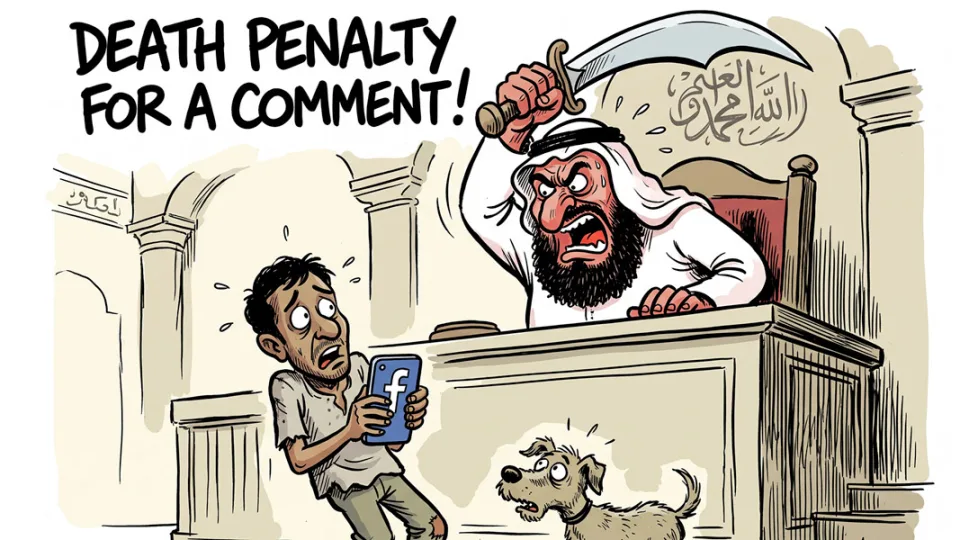
Saudi appeals court sentences Sri Lankan Tamil worker to death over Facebook comment
Sivarasa Anojan, a Tamil migrant worker from Sri Lanka, now faces the death penalty after a Saudi appeals court replaced his five-year prison term for blasphemy tied to a Facebook comment. A Sri Lankan MP is challenging the government's handling of the appeal.